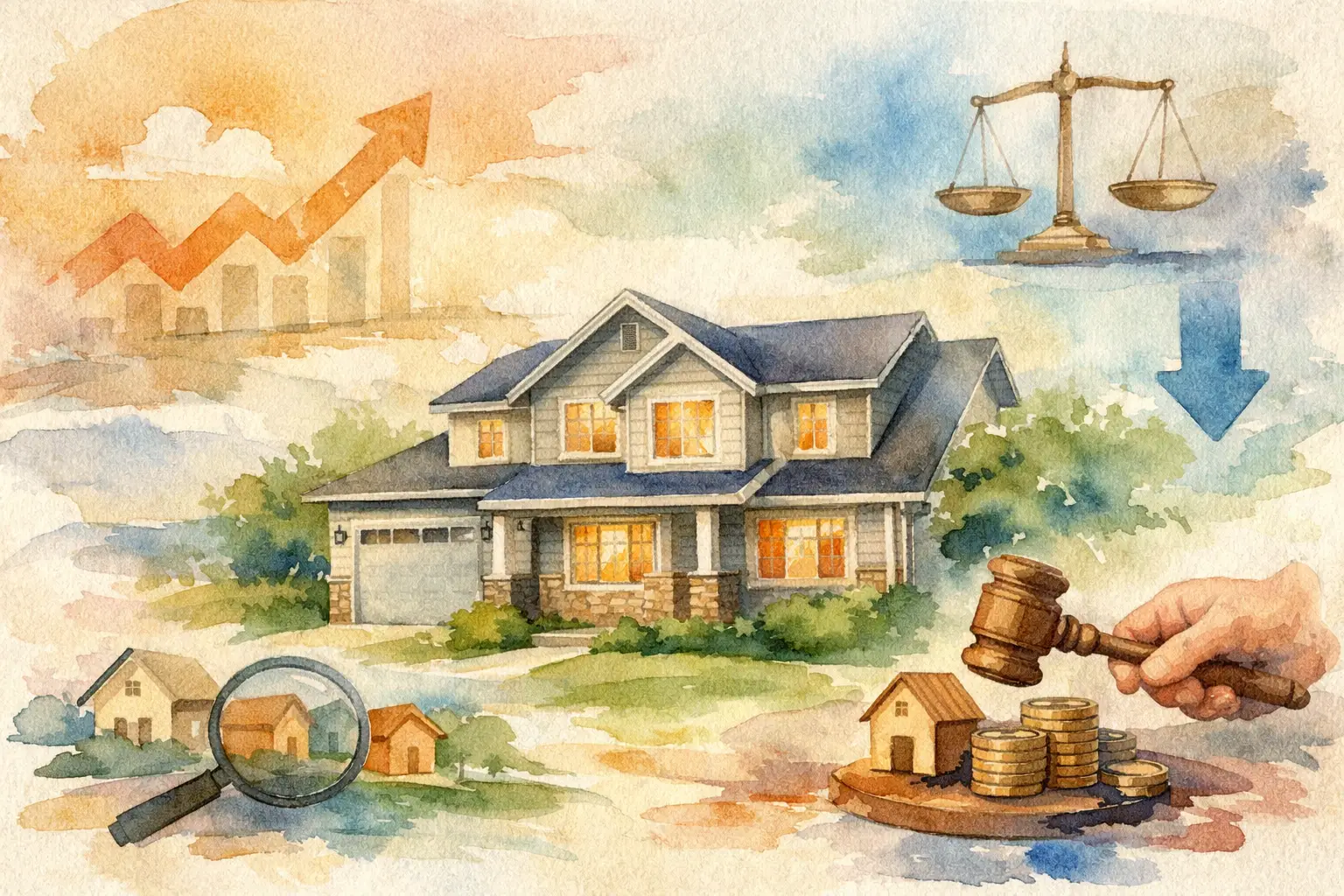
A home can be beautifully prepared, thoughtfully marketed, and located in a strong neighborhood - and still miss the mark if the price is off.
That is why understanding how to price a home strategically matters so much. Pricing is not a guess. It is not a vanity exercise. It is a positioning decision that shapes buyer perception, showing activity, negotiation leverage, and ultimately the quality of the outcome.
For many sellers, the temptation is predictable. Price high to leave room to negotiate. Test the market. See what happens. On the surface, that approach can feel cautious. In practice, it often creates the very result sellers hope to avoid: less attention, more hesitation, and a listing that starts to feel stale.
Strategic pricing is different. It balances market data with buyer behavior. It respects the numbers, but it also understands emotion, timing, and context. It is not about pricing low for speed or high for ego. It is about pricing with precision.
What strategic pricing actually means
When people ask how to price a home strategically, they are usually asking a deeper question: how do I choose a number that protects value and attracts serious buyers?
The answer begins with one principle. A price is not just a reflection of what you want. It is a signal to the market.
Buyers do not see a price in isolation. They compare it instantly against competing homes, recent sales, interest rate pressure, neighborhood expectations, and their own sense of risk. If your price feels aligned, they engage. If it feels inflated, they pause. That pause is costly.
A well-priced home creates momentum. It draws qualified attention early, when the listing is freshest and buyers are most alert. That early activity matters because the first days on market often shape the story buyers tell themselves. A home with strong interest feels desirable. A home that lingers invites scrutiny.
Strategic pricing, then, is not about choosing the highest defensible number. It is about choosing the most effective number.
Start with the market, not the mortgage
Sellers often anchor to personal numbers. What they paid, what they invested in renovations, what they need for the next purchase, or what a neighbor claims to have received. Those numbers may matter to the seller, but they do not determine market value.
The market does.
That means looking first at comparable sales, not active listings alone. Sold properties tell you what buyers were actually willing to pay. Active listings show the competition, but they do not confirm value. Some are priced correctly. Some are aspirational. Some are already being ignored.
A strong pricing analysis considers homes with similar size, condition, location, lot characteristics, layout, and level of finish. It also weighs recency. In a changing market, a sale from six months ago may already be less relevant than sellers want to believe.
This is where precision matters. Two homes in the same neighborhood can produce very different outcomes based on street appeal, natural light, floor plan, updates, parking, or even how private the backyard feels. Strategic pricing does not flatten those details. It interprets them.
How to price a home strategically in a shifting market
A stable market allows for cleaner comparisons. A shifting market requires sharper judgment.
When interest rates rise, affordability tightens. When inventory grows, buyers become more selective. When uncertainty increases, hesitation increases with it. In those conditions, yesterday's pricing logic can quietly fail.
This is where many sellers get trapped. They price according to last season's peak rather than current buyer behavior. They assume their home should command what similar homes achieved months earlier, even if demand has softened. The result is often a listing that enters the market already out of step.
Strategic pricing requires emotional discipline. You have to read the market as it is, not as you wish it were.
Sometimes that means pricing slightly below a recent comparable to create urgency. Sometimes it means holding firm because your home offers a level of quality the market will recognize. Sometimes it means waiting to list at all. The point is not to follow a formula. The point is to align price with present conditions.
Buyer psychology is part of the math
Real estate is financial, but it is never purely rational.
Buyers respond to thresholds. A home priced at $999,000 enters a different search pattern than one at $1,025,000. A property that appears well-positioned relative to nearby options feels safer to pursue. One that feels stretched can trigger caution before a showing is ever booked.
Pricing also affects negotiation tone. A home that feels fairly priced often attracts cleaner conversations and stronger offers. A home that feels overpriced tends to invite aggressive negotiations, delayed interest, or low offers that frustrate everyone involved.
There is also a status effect in certain price bands, especially in premium markets. If a home is priced too low relative to its category, buyers may wonder what is wrong. If it is priced too high without clear justification, they may dismiss it before seeing it. Strategic pricing protects against both errors.
This is one reason a clarity-first advisor is valuable. Data can narrow the range. Experience helps interpret how buyers will emotionally receive the number.
Presentation and price must match
Price does not operate alone. It works in relationship with presentation.
A fully prepared home with strong photography, thoughtful staging, and a clear market narrative can often support tighter pricing because buyers perceive coherence and value. A home that is cluttered, visually dated, or poorly marketed will struggle even at a competitive number.
This is an uncomfortable truth for some sellers. They want the market to price the home based on potential, while buyers are evaluating what they can see today. If the presentation is weak, the price must account for that. If the home is elevated and positioned well, the price can reflect that strength.
Strategic pricing is not isolated from the rest of the listing strategy. It is the center of it.
Avoid the two most common pricing mistakes
The first mistake is overpricing to leave room for negotiation.
In many cases, that room never gets used because the right buyers never engage. The listing misses the strongest window of attention, accumulates days on market, and eventually requires a price reduction. By then, the property may appear less desirable than it actually is.
The second mistake is underpricing without a deliberate plan.
There are times when pricing below market value can be strategic, particularly if demand is strong and the goal is to generate multiple offers. But that only works when the property, timing, and market conditions support it. Underpricing in a slower or more cautious market can simply leave money behind.
Both mistakes come from the same place: reacting instead of positioning.
The right price is usually a range, not a single perfect number
Sellers often want certainty. They want one exact number that guarantees success. Real estate rarely works that way.
A strategic advisor usually sees a pricing band - a realistic range shaped by market evidence, buyer psychology, and the desired outcome. Within that range, the final number depends on your priorities.
If speed matters, you may price at the sharper end of the range. If your home is truly differentiated and you can tolerate more time, you may test the upper edge. If the market is highly sensitive, precision becomes even more important.
This is where the conversation becomes more sophisticated than comps alone. Good pricing reflects property value. Great pricing reflects seller strategy.
How to know if the market is confirming your price
Once a home launches, the market responds quickly.
Strong showing volume, quality buyer feedback, repeat interest, and early offer activity usually suggest the price is aligned. Sparse traffic, polite but hesitant comments, and consistent feedback that the home feels high relative to alternatives are signs the market is resisting the price.
The key is to assess that feedback without defensiveness. Sellers sometimes wait too long to adjust because they interpret silence as bad timing rather than mispricing. Silence is information.
A strategic response is not panic. It is calibration.
If the first wave of buyers passes without traction, the market is telling you something valuable. The best move is often a timely adjustment, not a prolonged hope that the right buyer will eventually appear.
Pricing is a leadership decision
At its best, pricing is not just analytical. It is disciplined.
It asks a seller to separate identity from asset, expectation from evidence, and fear from strategy. That is not easy, especially when the home carries history, effort, and meaning. But clarity creates leverage. When sellers are clear, they make cleaner decisions. When pricing is clean, the market can respond cleanly.
Shanna Giannakis approaches this work with that exact lens: market intelligence paired with calm, strategic discernment. Because the number itself matters, but the thinking behind it matters more.
If you are preparing to sell, resist the urge to chase the highest number you can justify. Choose the number that puts you in the strongest position. A price should not simply reflect value. It should create movement.