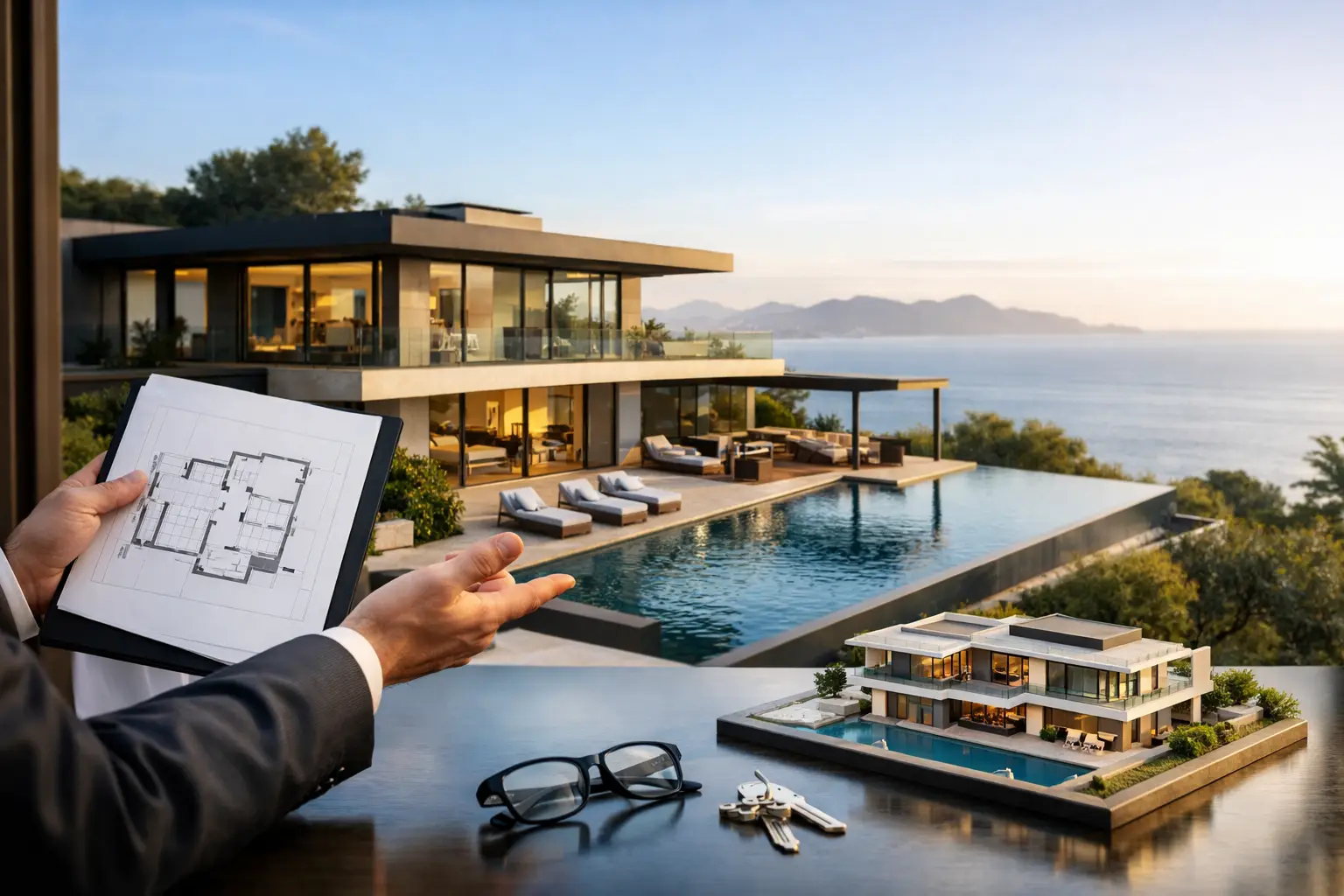
A luxury property can be beautifully designed, impeccably located, and objectively valuable - and still miss the mark in the market.
That is the first truth behind how to position a luxury property. At the high end, success rarely comes from exposure alone. It comes from alignment. The right price, the right story, the right buyer psychology, and the right timing must all support each other. If even one of those elements is off, the property can begin to feel expensive instead of exceptional.
Luxury buyers are not simply purchasing square footage or finishes. They are evaluating identity, discretion, lifestyle fit, and future value. They are often highly informed, emotionally guarded, and quick to sense when a home has been marketed too broadly, priced too optimistically, or presented without strategic care.
This is why luxury positioning is not decoration. It is strategy.
What luxury positioning actually means
When people ask how to position a luxury property, they often mean how to make it look more premium. Presentation matters, but positioning goes deeper than aesthetics.
Positioning is the discipline of defining what the property is, who it is for, and why it deserves attention in a specific market. It shapes the entire sale strategy. Not just the photos or the staging, but the price architecture, the language used to describe the home, the audience being targeted, and the emotional tone of the buyer experience.
A well-positioned luxury property feels coherent. The valuation makes sense. The visual presentation supports the price. The marketing speaks to the right buyer rather than everyone. The showing experience reinforces what the listing promises.
That coherence builds trust. In luxury real estate, trust moves decisions.
Start with the buyer, not the property
One of the most common mistakes in high-end sales is over-focusing on the seller's emotional attachment or the home's feature list. Luxury positioning begins elsewhere. It begins with the likely buyer.
Who is this home actually for?
That question sounds simple, but it changes everything. A waterfront retreat for a Montreal executive seeking privacy is positioned differently than a refined urban residence meant for an international buyer who values architecture, convenience, and lock-and-leave ease. Both may be expensive. They are not sold through the same lens.
The more specific the buyer profile, the sharper the strategy becomes. You can emphasize the elements that matter most - legacy, privacy, design pedigree, entertaining capacity, walkability, acreage, wellness features, security, or investment hold potential.
Without that clarity, marketing becomes generic. And generic is expensive in the luxury segment.
The danger of broad messaging
Luxury sellers sometimes believe the goal is to appeal to as many buyers as possible. In practice, broad messaging often weakens perceived value.
Prestige properties respond better to precision. The right buyer does not need every feature explained. They need the property framed in a way that resonates with their standards, aspirations, and concerns. A home that tries to be everything to everyone can lose its point of view.
Price is part of positioning
Pricing a luxury property is not a math exercise alone. It is a market signal.
Of course, comparable sales matter. So do inventory, absorption, neighborhood dynamics, condition, and uniqueness. But at the high end, pricing also communicates confidence, realism, and strategic intent.
If a property is priced above what the market can justify, buyers do not simply negotiate. They often disengage. Sophisticated buyers tend to interpret overpricing as either emotional decision-making or poor advisory guidance. Neither inspires urgency.
If it is priced too low without a deliberate strategy behind it, the property can generate attention but undermine its own positioning. In luxury, perceived scarcity and perceived quality are closely linked. Price affects both.
The strongest pricing strategy sits at the intersection of value and psychology. It reflects the property's true standing while protecting momentum in the early days of market exposure, when perception is most fragile.
When uniqueness changes the pricing conversation
Some luxury homes are difficult to compare. Architectural significance, exceptional views, rare land parcels, or custom construction can make standard comparables feel inadequate.
In those cases, the answer is not to abandon discipline. It is to deepen it. The property still needs a clear pricing rationale, even if the rationale is more interpretive. Buyers will pay a premium for rarity. They still want to feel that the premium has been intelligently framed.
The story must match the asset
Luxury properties are not sold by adjectives. Words like stunning, exquisite, and one-of-a-kind are overused because they ask the buyer to do the work of believing. Strong positioning does the opposite. It creates a narrative that makes the property's value legible.
That narrative should be grounded in truth. Not hype.
What is the actual differentiator? It may be the way natural light moves through the house at key hours. It may be the architectural restraint. It may be a rare sense of privacy in a dense area. It may be the ability to host at scale without sacrificing intimacy.
The story should also reflect the buyer's emotional motive. Some luxury buyers want recognition. Others want refuge. Some want convenience. Others want permanence. The same property can be framed in different ways, but the chosen narrative must remain consistent across pricing, imagery, showings, and negotiation.
This is where advisory judgment matters. The goal is not to invent a story. The goal is to identify the right one.
Presentation should remove friction, not create theater
There is a difference between elevated presentation and overproduction.
High-end buyers expect a property to be visually compelling. They notice scale, materials, proportion, and finish quality immediately. They also notice when a home has been styled in a way that feels performative rather than authentic.
To position a luxury property well, presentation should clarify value. It should help the buyer understand how the home lives. That may mean refined staging, editing overly personal decor, improving lighting, addressing deferred maintenance, and creating stronger visual continuity from room to room.
But not every luxury property benefits from the same treatment. A minimalist architectural home may need restraint. A grand traditional estate may need warmth and softness to avoid feeling formal or dated. A penthouse with dramatic views may need less furniture, not more.
Good presentation supports the property's identity. It does not compete with it.
Exposure matters, but curation matters more
Luxury sellers often ask how much marketing is enough. The better question is whether the marketing is reaching the right people in the right way.
Mass visibility can help at lower price points. In luxury, too much undifferentiated exposure can erode exclusivity or create the impression that the property is chasing attention. That does not mean limiting reach unnecessarily. It means being intentional.
Certain homes benefit from broad digital distribution. Others are better served through private networks, targeted outreach, carefully controlled previews, or advisor-to-advisor introductions. It depends on the property's profile, the seller's privacy needs, and the likely buyer pool.
This is especially true in relationship-driven markets, where trust and discretion influence access. A luxury property is not only being marketed. It is being introduced.
How to position a luxury property in a shifting market
Market conditions change the tone of the strategy, not the need for strategy itself.
In a fast market, strong positioning helps prevent underpricing, sloppy negotiation, or the wrong buyer fit. In a slower market, it becomes even more critical. Buyers become more selective. Days on market carry more meaning. Pricing mistakes are punished faster, and stale inventory starts to shape perception.
In softer conditions, sellers often feel tempted to "wait and see" with pricing or presentation. That hesitation is understandable. It can also be costly. Luxury buyers are highly sensitive to market signals. If the property lingers without a clear reason, they start looking for weakness.
A calm, precise launch usually outperforms a hesitant one.
Positioning is also a negotiation strategy
By the time an offer arrives, the positioning has already done much of the negotiation work.
If the property has been priced credibly, presented with discipline, and framed around its true value, buyers enter the conversation with a clearer sense of what they are competing for. That strengthens leverage. It also creates a more composed decision environment for the seller.
If the positioning has been inconsistent, negotiation becomes reactive. The seller starts defending the price, explaining past choices, or compensating for weak early impressions. That is not where you want to be in a high-stakes sale.
This is one reason strategic advisors think beyond marketing assets. They consider what each pre-listing decision will mean once pressure enters the room.
The properties that sell best feel easy to understand
Not simple. Clear.
Luxury buyers are fully capable of appreciating complexity. But they still want to understand, quickly and intuitively, why a property matters. What makes it rare. Why it belongs at its price point. Why it fits their life or portfolio.
That is the real answer to how to position a luxury property. You do not force prestige. You reveal it with discipline.
At its best, positioning creates something buyers can feel before they try to explain it. Confidence. Coherence. Trust.
And those are often the qualities that move a remarkable property from admired to chosen.